Spanning thousands of kilometres and several years, five young scholars completed an extraordinary academic relay. Gao Hao, Chong Chak Fong, Wu Zewei, Zhu Han, and Shen Lu became the first graduates of the dual PhD programme in Information Technology jointly offered by Macao Polytechnic University and the University of Coimbra (UC). Guided by supervisors from both universities, they exchanged ideas across cultures, blending Eastern rigour with Western innovation to tackle complex research challenges. Their achievement marks a vivid chapter in MPU's mission to cultivate talent with a global vision, proving that when knowledge moves like a relay, boundaries fade.
New Frontiers in Cross-Border Research
Leveraging Macao's strategic role as a Sino-Lusophone platform, Macao Polytechnic University and the University of Coimbra (UC) have jointly launched Macao's first dual PhD programme in Information Technology. Covering cutting-edge fields such as artificial intelligence, big data, computer science, and automation engineering, this innovative model merges Eastern and Western academic strengths and fosters cross-cultural collaboration. Students thrive in a diverse environment that sparks creativity and broadens global perspectives.
MPU continues to integrate education, research, and talent development while actively exploring new models of international collaboration. This intercontinental joint provision injects fresh momentum into talent mobility and research innovation, marking a significant milestone in Sino-Lusophone collaboration. It strengthens Macao's position as a hub for high-level technological talent and global academic exchange.
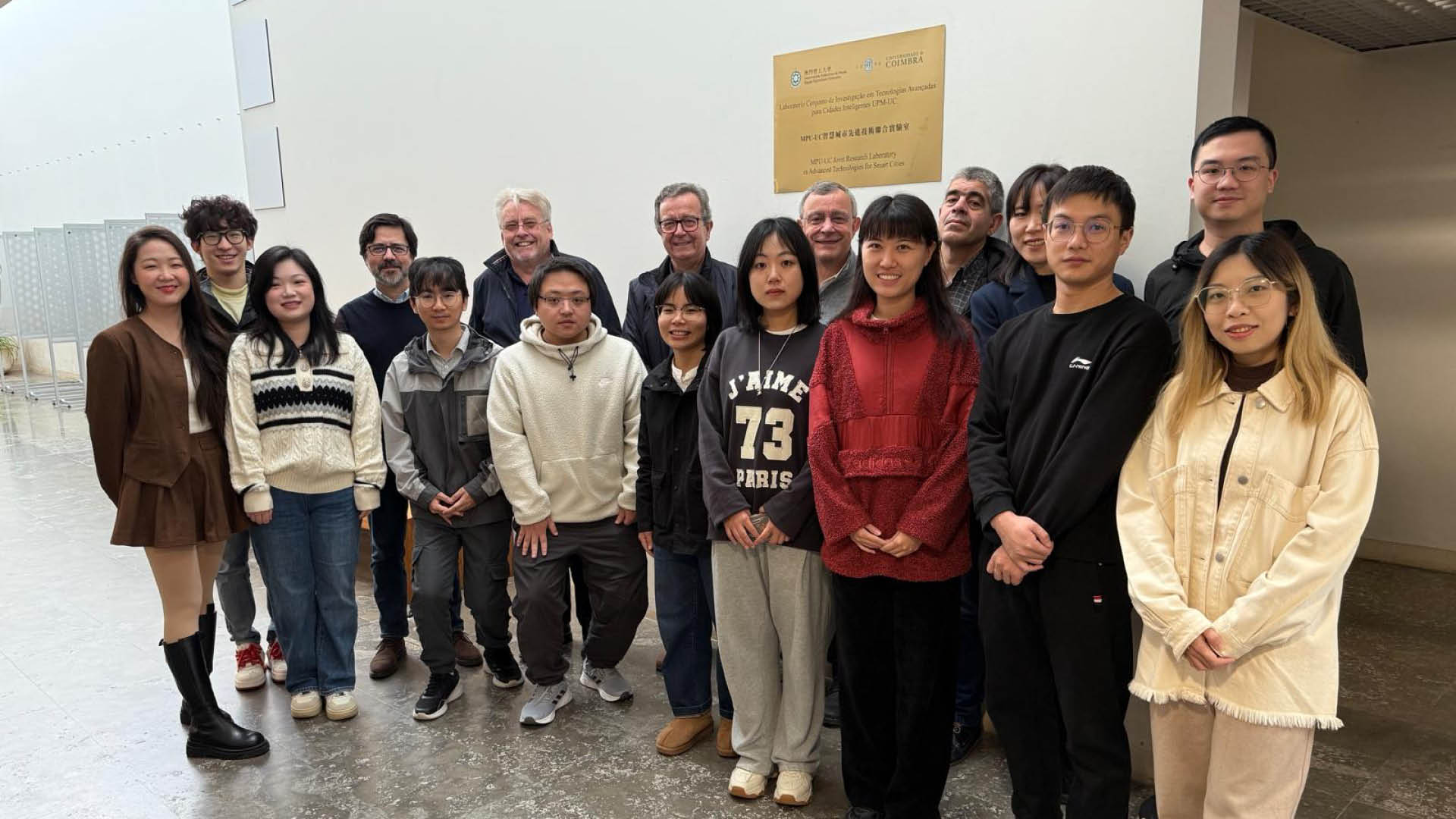 Students of the dual PhD programme in Information Technology jointly offered by Macao Polytechnic University and the University of Coimbra with their supervisors from the University of Coimbra
A Distinctive Dual-Track Academic Journey
"Studying in two places is like walking two different scenic paths that ultimately lead to the same destination," says Gao Hao, one of the first graduates, describing the unique experience of the dual PhD programme. Students begin with two years at MPU to build a solid foundation in theory and technology, followed by a year of intensive research at UC. This dual-location model immerses students in two distinct academic cultures, offering a truly global learning experience.
For Chong Chak Fong, the first student who has gone all the way from bachelor's to doctoral studies at MPU, the journey was a testament to the University's growth. "I witnessed and experienced the continuous enhancement of programme quality," he recalls, noting the pride of seeing the curricula successfully accredited by the UK's Institution of Engineering and Technology (IET). Fellow graduate Wu Zewei reflected on the joint supervision model: "I worried about cultural gaps at first, but our two supervisors complemented each other perfectly. Integrating their perspectives challenged us to think independently and sharpened our communication skills."
With more than seven centuries of history, UC stands as a cornerstone of academic excellence in the Portuguese-speaking world. Its Faculty of Science and Technology, one of the university's largest, drives innovation by integrating research, industry, and entrepreneurial incubation. This dynamic approach encourages students to tackle problems from multiple perspective, fostering creativity and practical solutions, a vivid example of the success of the "technology x language x internationalisation" strategy.
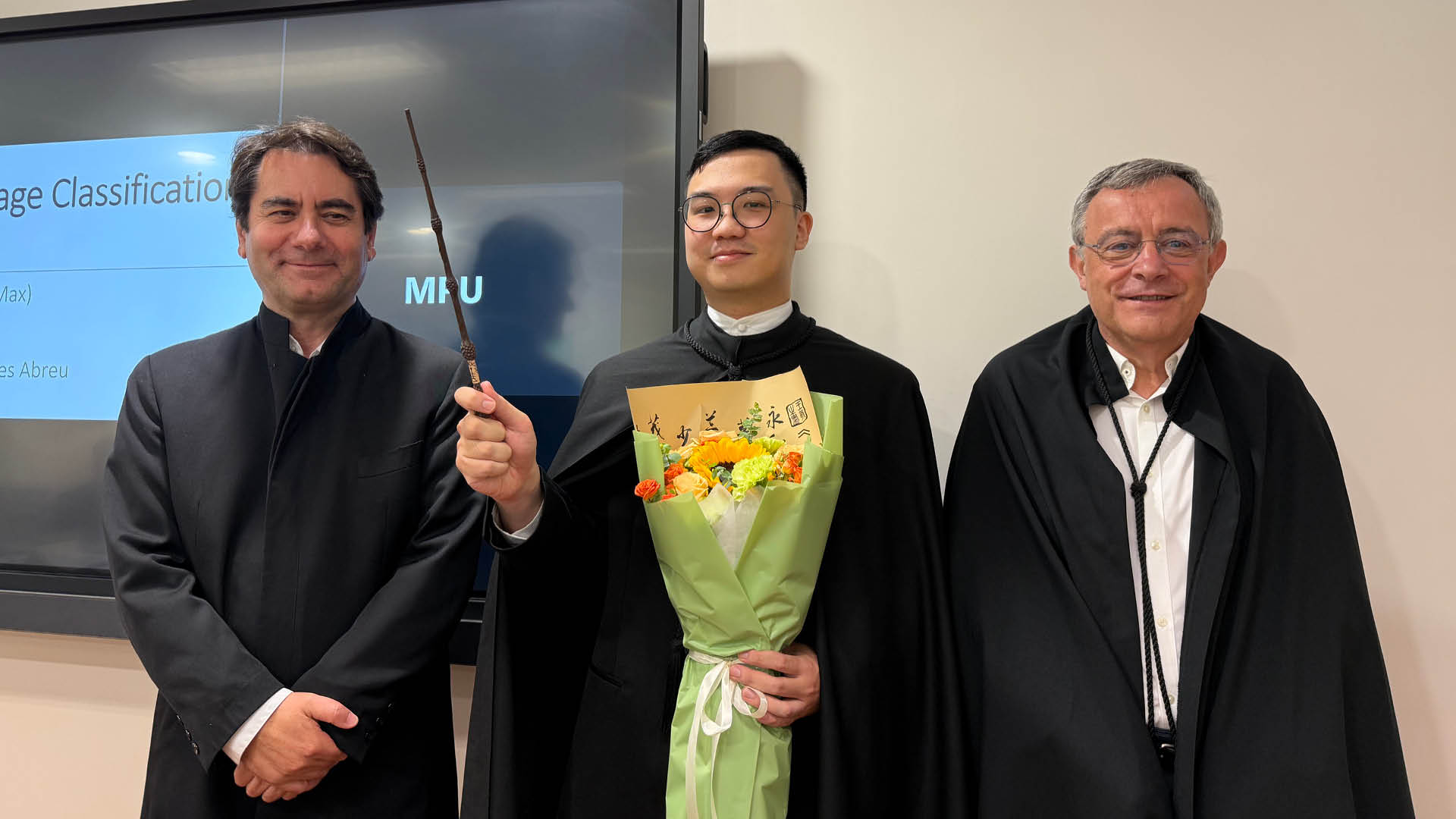 Dual-PhD recipient Chong Chak Fong, the first student who has gone all the way from Bachelor's to doctoral studies at MPU, during his thesis defence
From Research Ideas to Practical Impact
Before travelling to Portugal, all five scholars had already begun their doctoral research at MPU, projects carefully designed to reflect personal interests while addressing critical gaps in their fields. Each study embraced interdisciplinary thinking and focused on practical impact, aiming to turn innovative ideas into solutions for real-world challenges.
Gao Hao explored the intersection of neuroscience and software engineering, using eye-tracking and data analytics to study programmers' cognitive load. "We found that traditional code complexity metrics aren't absolute; eye revisits often reveal cognitive strain more accurately," he explains. His work produced a new complexity model that reflects real cognitive effort, paving the way for more human-centred software design.
Chong Chak Fong focused on medical imaging, tackling the scarcity of labelled data in deep multilabel image recognition. He developed a suite of post-training algorithms for deep learning, significantly improving chest X-ray disease diagnosis accuracy. His work provides more precise AI-assisted tools for medical diagnostics, advancing the development of smart healthcare.
Wu Zewei specialised in visual multi-object tracking, proposing an innovative approach that treats detection algorithms as generalised "online sensors". By analysing dynamic patterns through a time-series perspective, he designed an adaptive short-trajectory tracker capable of maintaining stability even in low-confidence detection scenarios.
Zhu Han turned his attention to communication security in the IoT era, particularly in ambient backscatter systems. He introduced a novel system architecture that enhances both stability and confidentiality in data transmission, marking a critical step toward secure and reliable IoT communications.
Shen Lu addressed a longstanding challenge in Chinese information processing: handwritten text recognition and glyph restoration in noisy environments. Her model effectively reconstructs and identifies distorted characters in Chinese contexts, laying the foundation for applications such as digitising historical documents.
The Academic Magic of a Portuguese City
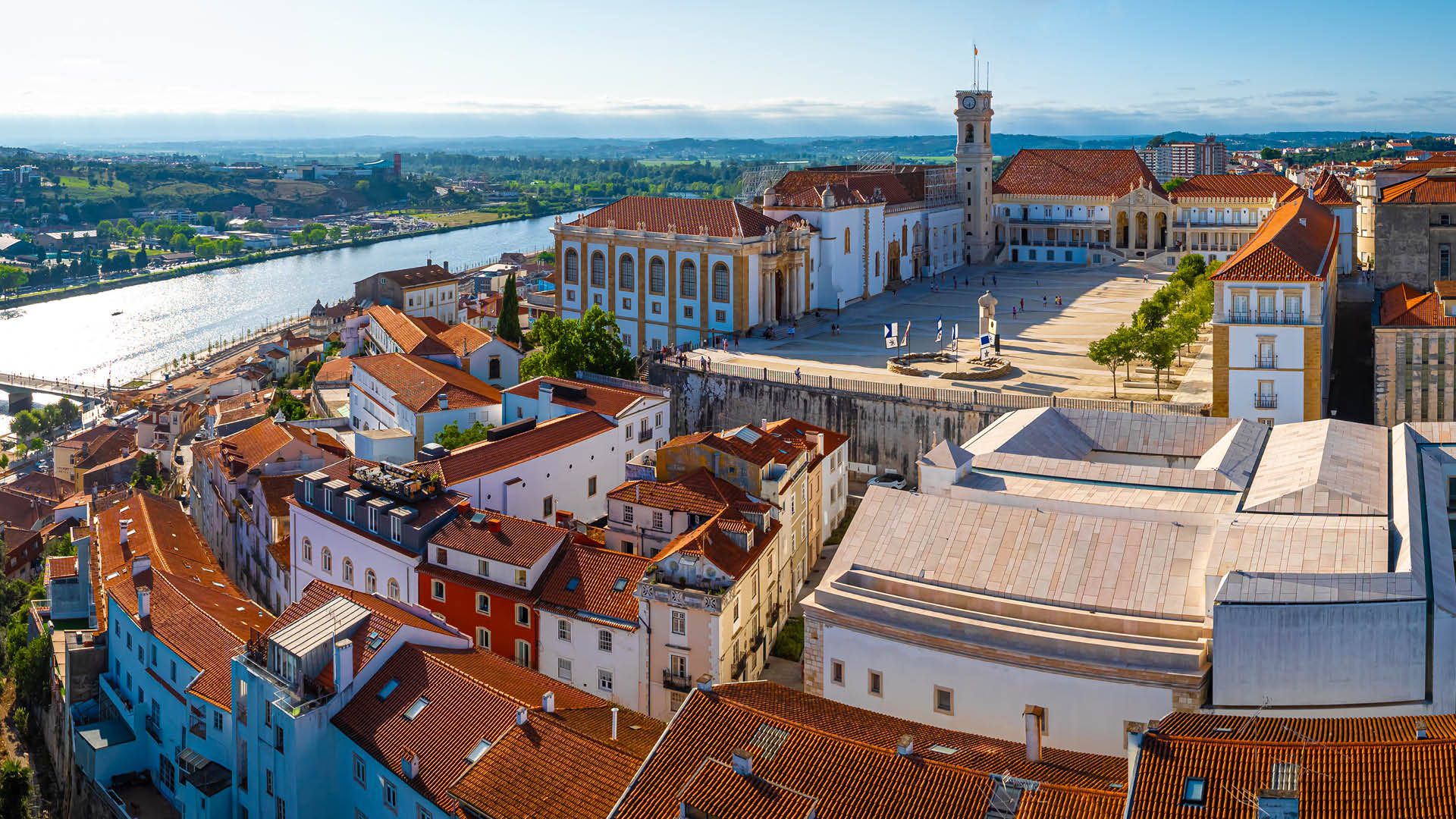
Coimbra, a UNESCO World Heritage city, is steeped in history and a distinctive philosophy of life. Immersing oneself here means absorbing its rich cultural atmosphere and unique way of thinking. Wu Zewei vividly describes the experience: "Coimbra feels like a vast museum. From traditional cuisine to festive parades, from weathered architecture to lively football fields, every corner tells a story. Behind these stories is a passion for life and a sense of ease. The university campus, with its statues, libraries, and museums, feels like a time corridor, carrying centuries of precious memories. It's said to be one of the inspirations behind the globally popular Harry Potter series."
For the five graduates, the greatest growth came not only from academic achievement but from a transformation in mindset and problem-solving skills. "The biggest change was learning to think independently and solve problems in a cross-cultural environment. I improved my professional skills and gained clarity about my academic interests and career direction," says Zhu Han. Gao Hao echoes this sentiment, highlighting his enhanced ability to integrate disciplines: "In the past, I relied heavily on guidance and fixed methods. Now, I can design experiments, analyse complex data, and combine approaches from software engineering, cognitive science, and psychology to tackle challenges. I also feel more confident facing difficulties."
Shen Lu emphasises the forward-looking nature of the dual degree programme: "Local training with a global perspective is a visionary model. It combines local resources with international strengths, enhancing academic vision, research capability, and cross-cultural communication. This experience confirmed for me that international collaboration and local connection are the twin wings of scientific breakthroughs."
The dual PhD programme jointly created by MPU and UC transformed their academic aspirations into solid steps forward. This journey across Asia and Europe forged a confidence that is both deeply rooted locally and ready to engage globally. These five graduates carry the rich heritage of two universities and a global perspective, continuing the dialogue between East and West. Today, they set out from here. Tomorrow, they may be solving problems the world has yet to imagine.
Pictures provided by interviewees
A Symphony of Language and Technology
Machine Translation's Triple-Helix Innovation Leap