
From X-rays to CT and MRI scans, medical imaging has evolved from hanging film sheets on lightboxes to digital screens. Yet, physicians have long relied on the naked eye to detect anomalies. Today, artificial intelligence is changing that. By applying advanced algorithms, AI helps interpret images, assists diagnoses, and predicts disease, reducing repetitive tasks and enhancing accuracy. The future of medicine is an innovative journey alongside AI. Leveraging its strong foundation in applied sciences and AI, Macao Polytechnic University established the Intelligent Medical Computing Laboratory in September 2025, a flagship platform driving academia-industry-research collaboration and steering healthcare into a new era of technological innovation.
A Trinitarian Model for Precision Medicine
The Intelligent Medical Computing Laboratory focuses on three strategic directions: spatiotemporal heterogeneity analysis of medical images, multimodal biomedical data integration, and disease progression prediction and prognosis. By converging interdisciplinary talent, advanced technologies, and clinical needs, the lab has created an innovative platform integrating research, education, and industry translation. Within its first year, it published multiple high-impact papers and excelled in international competitions, emerging as a driving force for medical AI development in Macao.
The laboratory's research agenda is shaped by a clear strategic vision and technological foresight. In medical imaging analysis, the team is developing advanced AI algorithms for automated annotation, lesion detection, and image quality enhancement across CT, MRI, and ultrasound scans. For disease prediction, the lab is pioneering multimodal data fusion, integrating imaging, genomics, and electronic health records to enable risk stratification and early warning. In AI-assisted clinical systems, significant breakthroughs have been achieved in personalised interventions, leveraging real-world evidence and clinical indicators to design tailored prevention, treatment, and rehabilitation plans.
Leading Minds Strengthening Impact
In 2025, the laboratory achieved remarkable success, with its work featured in top-tier journals, such as Nature Communications, Nature Biomedical Engineering, and Cell Reports Medicine. Among its breakthroughs was a multimodal predictive model that improved the accuracy of forecasting responses to neoadjuvant therapy in breast cancer patients by over 10%, enabling clinicians to deliver more effective treatment strategies.
The lab also co-hosted "Deep-Breath 2025" Breast Cancer Diagnosis and Treatment Challenge with the Netherlands Cancer Institute, focusing on AI and deep learning applications in breast cancer care. Additionally, MPU spearheaded the Universal Ultrasound Image Challenge (UUSIC25) on Multi-Organ Classification and Segmentation, driving advancements in multitask models for ultrasound image analysis and attracting leading researchers worldwide.
Leaping onto the Global Stage
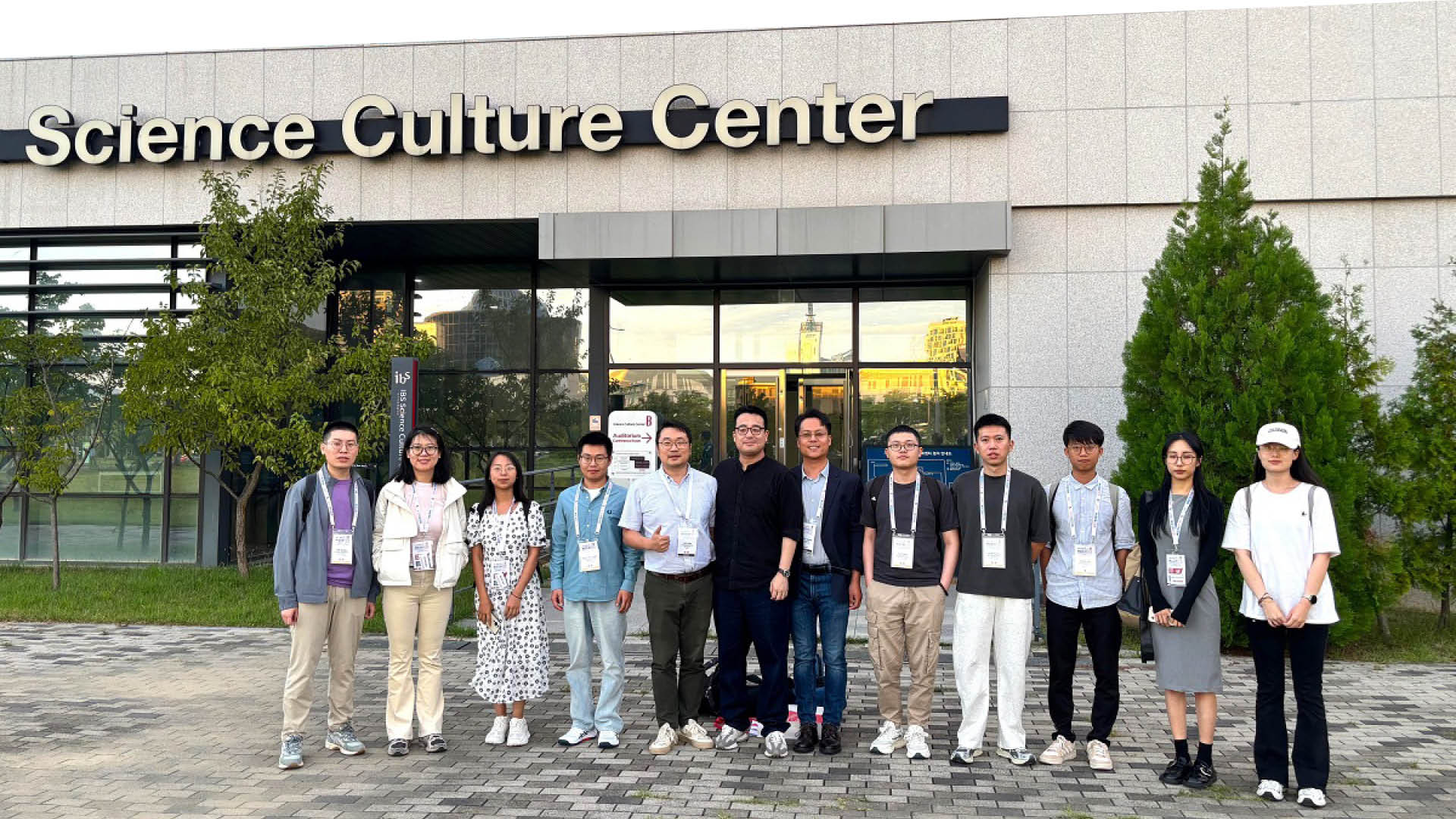
The International Conference on Medical Image Computing and Computer-Assisted Intervention (MICCAI) 2025, held in Daejeon, South Korea, featured the highly anticipated "HECKTOR 2025" Head and Neck Tumour Imaging Challenge. Making its Debut, the Intelligent Medical Computing Laboratory delivered an outstanding performance. The lab presented 16 high-quality papers and clinched the championship, outshining some of the world's leading teams. Even during its early days, the lab had already claimed global victory at the Breast Cancer Mammography Classification Challenge organised by the São Paulo Radiology Society in Brazil. These honours mark not only triumphs in academic competition but also a significant leap for Macao's research strength onto the international stage.
While research forms the backbone of the laboratory, talent is its lifeblood. Committed to global talent development, the lab has established strong collaborations with research institutions in Brazil, the Netherlands, and other European countries. It also plays a key role in MPU's degree programmes on AI, offering core modules such as Machine Learning and Intelligent Data Analysis, and Digital Image and Multimedia Processing. Through a research-driven education approach that balances theory and practice, the lab nurtures a new generation of innovators equipped with interdisciplinary thinking, clinical insight, and technological expertise.
Translation from Lab to Clinic
Academia-industry collaboration is a critical pillar for turning research into real-world solutions. The laboratory has forged strategic partnerships with GE Healthcare to co-develop the MPU General AI Ultrasound Algorithm, aimed at significantly improving the accuracy and efficiency of ultrasound diagnostics. In collaboration with ScreenPoint Medical in the Netherlands, the lab is advancing breast mammography detection algorithm to promote precision and accessibility in early cancer screening. These joint initiatives not only deliver practical solutions for the healthcare industry but also create multi-layered platforms for students and researchers to bridge academia and industry.
The lab coordinates global efforts among multinational corporations, universities, and research institutions to establish the IEEE P3350 International Standard for AI in Medical Imaging, underscoring its pivotal role in global standardisation. Associate Professor Tan Tao, Director of the Intelligent Medical Computing Laboratory, emphasises, "Our core strategy centres on research innovation, industrial application, and excellence in education. We are working with medical enterprises to advance AI applications in oncology treatment, accelerate technology transfer, and collaborate with innovative medical device companies to provide hardware support for ultrasound algorithm development."
A Closed-Loop Design for Talent and Impact
At present, the Intelligent Medical Computing Laboratory has already deployed its self-developed Breast Cancer AI Screening Workstation in partner hospitals for pilot use. This system automatically detects and assesses lesion risks, significantly improving clinical efficiency and accuracy. Looking ahead, the lab plans to build a regional health risk early-warning platform and advance the clinical adoption of large-scale AI ultrasound models, creating a full-chain transformation from campus to community and from algorithms to everyday healthcare. These initiatives aim to deliver a sustainable application paradigm for Macao, the Greater Bay Area, and global health technology development.
To better serve regional priorities, the lab aligns closely with Healthy China 2030 and the strategy goals of the Greater Bay Area. Dedicated research teams are organized around key areas such as tiered diagnosis, smart hospital construction, and public health emergency management. With innovation as its pen and collaboration as its bridge, the lab is driving deep integration of AI and healthcare. In the vast ocean of medical technology, it is charting a course for Macao's continuous development in intelligent medical computing.

Health Reimagined in the AI Era
Crafting a Smart Ecosystem for Care, Wellness, and Discovery